Statutory Legality of Playing at Casinos Outside the GamStop Database
 Available in GB
The short answer is that UK law does not make it a criminal offence for a UK resident to access an offshore casino that lacks a UK Gambling Commission licence. The offence sits with the operator, not the player. That, however, is not the same as saying the activity is protected by UK law. Those are two different statements and the gap between them is where the practical risk lives.
This page works through the statutory text, the operator-versus-player asymmetry it creates, and the enforcement picture as it actually stands in 2026. It also flags the industry figures around the offshore market that the UK Gambling Commission has declined to endorse, so they can be read with appropriate caution.
Despite local restrictions, British residents still have full legal access to a wide variety of regulated offshore casinos that operate outside the UKGC perimeter.
Table of Contents
- Section 33 Interpretation and Statutory UK Gambling Act Provisions
- How the 2014 Act extended the licensing perimeter
- The asymmetry: operator-side offence, player-side liberty
- “Not illegal for the player” is not the same as “protected by UK law”
- UKGC enforcement against unlicensed operators in 2026
- The offshore market-size debate and what to make of it
- What “targeting the UK” technically means for an operator
- Where to turn for UK support
- How to read the legal picture as a player
- Our top casino picks for the UK
- About the author
Section 33 Interpretation and Statutory UK Gambling Act Provisions
The relevant statute is Section 33 of the Gambling Act 2005. The provision is short and direct: a person commits an offence if they provide facilities for gambling. There are exemptions, the most important being that the offence does not apply if the person provides those facilities under, and in accordance with, an operating licence issued by the Gambling Commission.
The penalty structure is set out in subsections (4) and (5). Under Section 33(4)(a), a person guilty of the offence is liable, on summary conviction, to imprisonment for a term not exceeding 51 weeks in England and Wales, a fine not exceeding level 5 on the standard scale, or both. Section 33(5) applies the same offence in Scotland but caps the imprisonment term at six months, in line with Scottish summary jurisdiction at the time of enactment.

What matters for a player is the subject of the offence. The provision criminalises providing facilities for gambling without a UKGC licence. It does not criminalise the act of placing a bet, depositing funds, or holding an account at a site outside the UK licensing system. That distinction is not a technical loophole; it has been the consistent reading of the section since enactment and is reflected in the UKGC’s enforcement record.
How the 2014 Act extended the licensing perimeter
The original 2005 Act drew its territorial line at where remote gambling equipment was physically located. That had the unintended effect of encouraging operators to set up servers outside the UK and then target UK consumers from overseas without falling within the licensing requirement.
The Gambling (Licensing and Advertising) Act 2014 closed that route. Section 33 was amended so that the offence applies to providers of remote gambling facilities used in Great Britain, regardless of where the equipment sits, provided the operator knows or should know that the facilities are being used, or are likely to be used, in Great Britain.
The practical test for “use in Great Britain” has been developed by the Gambling Commission in its compliance and enforcement guidance, and it draws on a mix of signals: whether the operator’s marketing is targeted at UK consumers, whether the operator accepts UK-issued payment methods or sterling deposits, whether the site is available in English and uses UK customer-service hours, and whether complaints from UK residents are handled without the operator pushing back on jurisdiction. An operator does not need to host its servers in Britain to be inside the offence; it needs only to be facilitating gambling by UK consumers in a way that brings the activity within the section.
The asymmetry: operator-side offence, player-side liberty
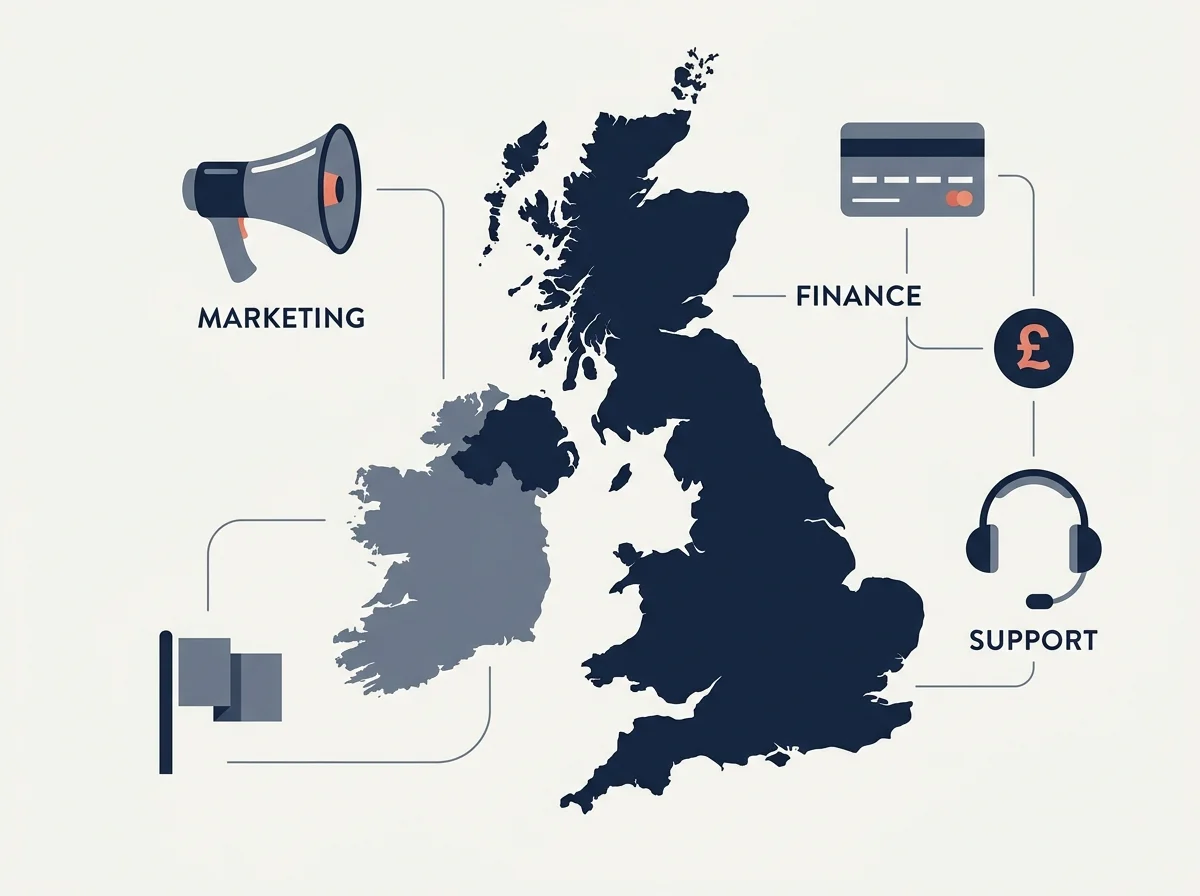
The clearest way to describe the UK position is as a one-sided rule. Section 33 is an operator offence. The Act does not contain a parallel offence for the consumer who chooses to use an unlicensed service.
That has practical consequences. UKGC enforcement actions against unlicensed operators do not produce collateral consequences for UK consumers who held accounts with those operators. Players are not prosecuted, fined, or otherwise sanctioned for accessing offshore casinos. The Commission’s enforcement record, year after year, has been operator-focused and supply-side: cease-and-desist notices, search-engine delisting referrals, payment-provider liaison, and ISP-level disruption.

So the legal asymmetry can be stated cleanly: providing facilities for gambling without a UKGC licence to anyone in Great Britain is an offence; choosing to use a service that is itself outside the UKGC licensing system is not. The legal weight of the entire enforcement architecture sits on one side of that line. The page on how the GamStop scheme works covers the licence-condition layer that produces the scheme; the section below addresses what is and is not lost when a player steps outside it.
“Not illegal for the player” is not the same as “protected by UK law”
This is the part of the picture most often blurred in summary answers to “is it legal?”. The absence of a player-side criminal offence does not mean the activity sits inside the UK consumer-protection framework. It sits outside it.
What UK law and UK regulation do for consumers of UKGC-licensed gambling is a specific bundle of protections: a complaints route through an approved Alternative Dispute Resolution provider (typically IBAS, with a binding award up to £10,000), affordability friction at the £150 net-deposit threshold over a rolling 30-day window, statutory slot stake limits of £5 per spin for adults aged 25 and over and £2 for adults aged 18 to 24, the credit-card ban under Licence Conditions and Codes of Practice provision 6.1.2, and mandatory integration with GamStop. None of these applies at an offshore casino, because none of these requirements binds an offshore operator.
What the player loses by stepping outside is therefore a substantive consumer-protection package, not a procedural footnote. The detail of that package and the practical consequences sit on the operator-landscape pages, including the offshore operator landscape in practical terms and the licensing regimes used by offshore operators. The pattern is the same in every case: the offshore licence delivers a different and lighter compliance package, and there is no UK regulator standing behind it.
The cancellation page covers the route that exists inside the UK system for a self-excluded player whose period is coming to an end, including the 0800 138 6518 removal call and the 24-hour cooling-off requirement; see the cancellation and cooling-off process for the full mechanics.
UKGC enforcement against unlicensed operators in 2026
The Commission has materially expanded its illegal-markets work in the current enforcement cycle. The headline figures from the 2025-26 enforcement programme include 741 cease-and-desist notices issued to unlicensed operators and advertisers, more than 1,000 referrals of website URLs to search engines for delisting, and around 1,100 websites either geo-blocked or removed in the run-up to 2026.
HM Treasury has supported the work with an additional £26 million of funding over three years, ring-fenced for illegal-markets enforcement. The Commission has been recruiting a Head of Illegal Markets, a senior role created specifically to lead the disruption work, and announced the appointment programme in early 2026.
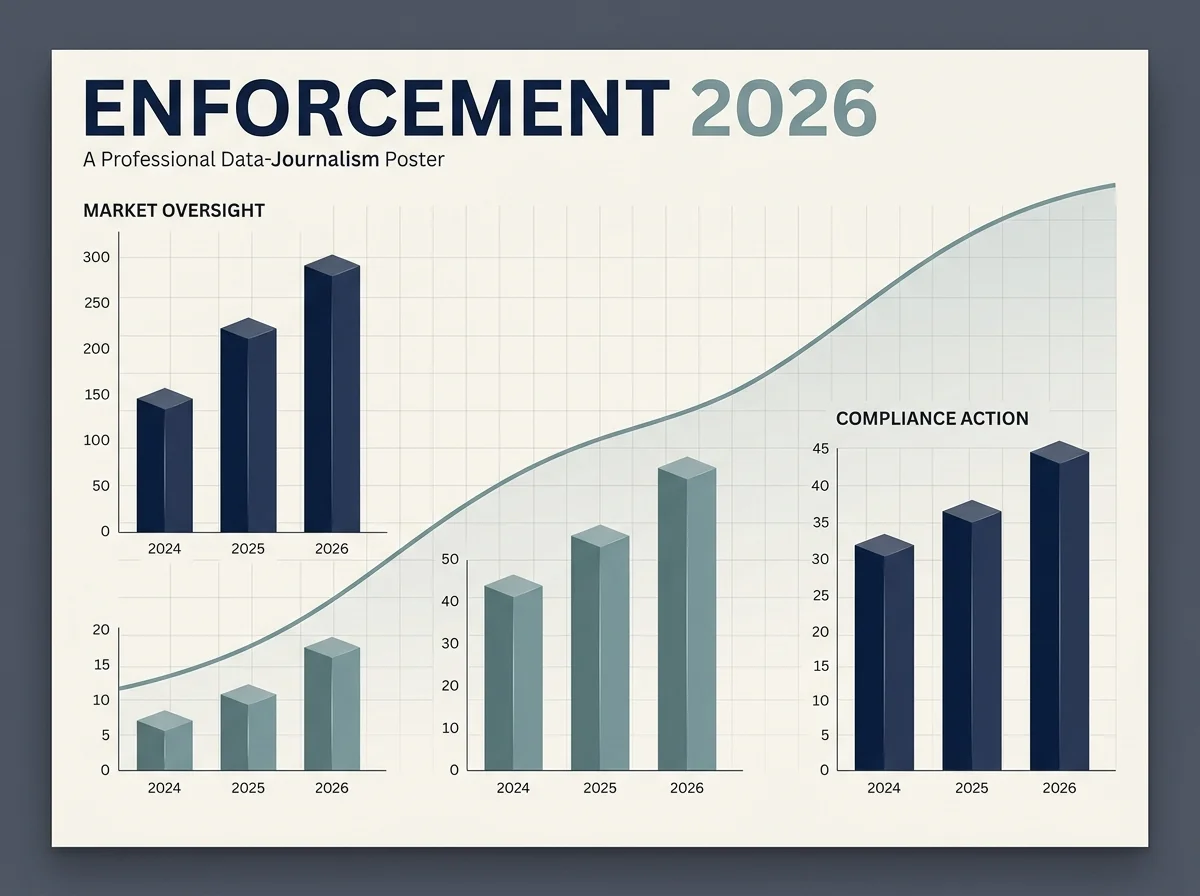
Operationally, the enforcement effort focuses on the operator and the supply chain rather than on individual consumers. The Commission works with search engines on delisting, with hosting providers on takedowns, and with payment providers and banks on transaction-level disruption. The result, visible in the data, is that the supply side of unlicensed activity is being squeezed at multiple points simultaneously, while the demand side is being addressed through consumer-education campaigns rather than through penalties on players.
A useful adjacent data point: in the same window, the Gambling Commission has noted that more than 73 per cent of operator compliance assessments inside the licensed market were rated good or satisfactory, with the regulator simultaneously increasing the number of suspensions and reviews against UKGC licensees that fall short. The same posture applies on both sides of the perimeter: tightening compliance for licensees, increasing disruption for the unlicensed market that surrounds it.
The offshore market-size debate and what to make of it
One question that almost always follows “is it legal” is “how big is the offshore market?”. Two separate sets of figures circulate, and the difference between them matters.
Industry-commissioned research from H2 Gambling Capital, published in 2026 and circulated by the Betting and Gaming Council, puts UK offshore betting stakes at around £16.6 billion in 2025, up from approximately £5 billion in 2019. The same research describes the legal market’s share falling from 97 per cent in 2019 to around 92 per cent in 2025. A separate study by Yield Sec identifies more than 500 illegal sports betting and casino operators actively targeting the UK in 2025, with 1,100 or more affiliates promoting them.
The UK Gambling Commission has explicitly declined to endorse the H2 Gambling Capital figures. The regulator’s stated position is that the methodology behind the industry-commissioned numbers is not robust enough to be cited as a UKGC view, and that it is itself pursuing dedicated research into the scale and drivers of the unlicensed market. The figures are real, in the sense that they have been published; what they are not is the Commission’s own.
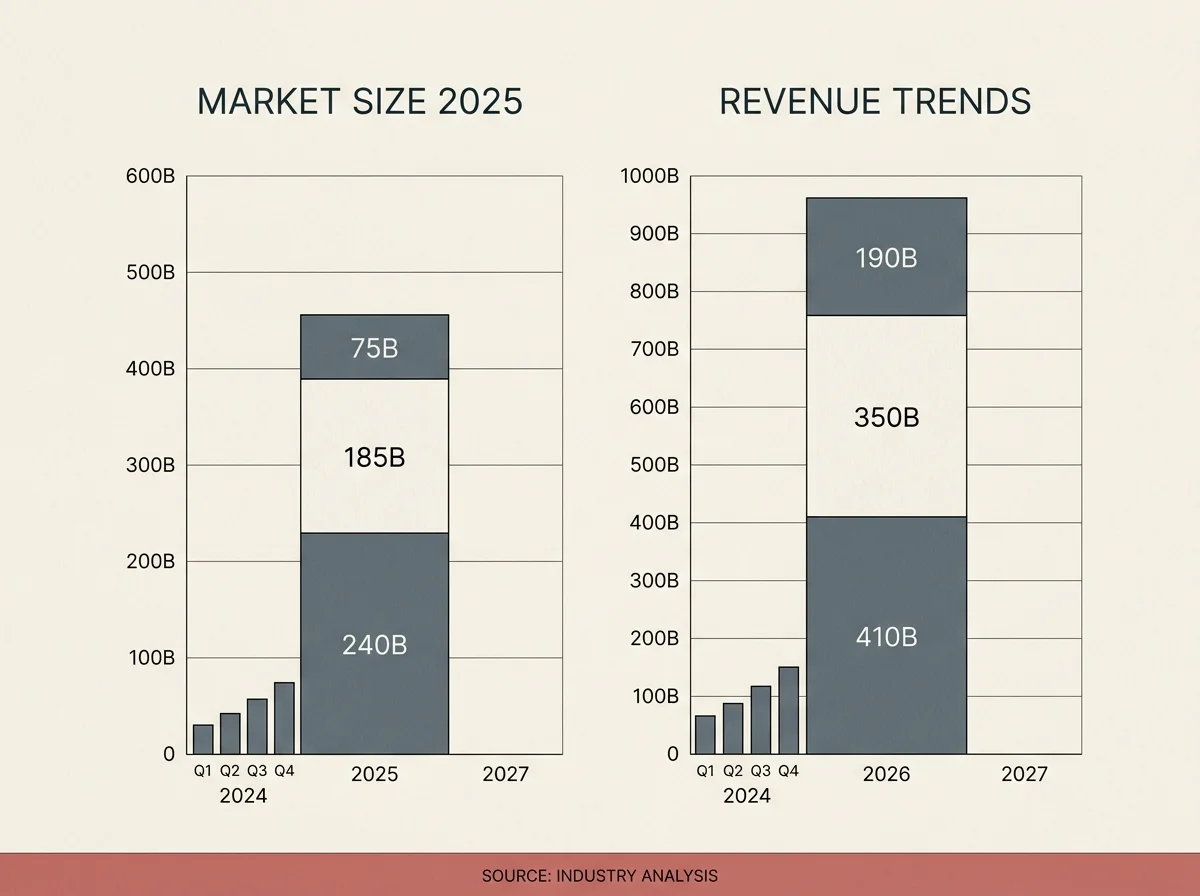
The honest reading is that the offshore market is large enough to be a serious enforcement priority and that its growth has accelerated since the introduction of statutory slot stake limits and tighter affordability checks. It is not so large that it has overtaken the licensed market. And the specific numbers most often quoted in policy debate are industry-side, not regulator-side. That should be the first qualifier in any conversation about offshore market size in 2026.
What “targeting the UK” technically means for an operator
An offshore operator has options. It can stop serving UK players, in which case Section 33 falls away because there is no facility being provided to UK consumers. It can continue serving UK players without active targeting, in which case it sits in a grey zone where it may not meet the UKGC’s “use in Great Britain” threshold but is still vulnerable to enforcement if the pattern of UK consumer use is sufficient. Or it can actively target the UK, in which case it is squarely within the scope of Section 33 as amended by the 2014 Act and faces the full enforcement toolkit.
Targeting indicators include marketing on UK-facing media, content optimised for UK search queries, hosting English-language customer support during UK working hours, sterling-denominated deposits, acceptance of UK-issued payment methods in routine flows, and the absence of an effective UK geo-restriction at the IP level. None of these is individually decisive; together they form the pattern the Commission looks at.

The visible market reaction to tighter enforcement has been a quiet thinning of the targeting end of the spectrum. Operators have either withdrawn from the UK altogether, started to geo-restrict UK IP addresses, or moved their marketing away from UK-facing channels. Operators that continue to accept UK players without restriction are, by definition, sitting on the more exposed side of the targeting test.
Where to turn for UK support
Whatever the legal status of accessing a non-GamStop site, the responsible-gambling resources behind the UK system remain available regardless of which side of the licensing perimeter a player happens to be on.
- National Gambling Helpline: 0808 8020 133 (free, 24/7, run by GamCare)
- GamCare: gamcare.org.uk
- BeGambleAware: begambleaware.org
- GAMSTOP: gamstop.co.uk
- Samaritans (general emotional distress): 116 123
How to read the legal picture as a player
The lawyerly framing reduces to three statements that are useful to hold together. The first is that providing gambling facilities to UK consumers without a UKGC operating licence is a criminal offence under Section 33 of the Gambling Act 2005, with the offence carrying up to 51 weeks of imprisonment in England and Wales, six months in Scotland, and a fine to level 5 on the standard scale. The second is that the offence sits with the operator, and there is no parallel offence for the UK player. The third is that the absence of a player-side offence is not equivalent to the presence of player-side protection.
The page on Curacao and Anjouan licence frameworks compared sets out what the offshore licences actually deliver in practice, which is the next question a UK player tends to have once the legal-status question is settled. The answer there is honest rather than reassuring, and that is the point of having the conversation in the order the licences themselves demand.
Our top casino picks for the UK
- x3betBonus: Welcome Pack 100% Up to £1.000 + 200 Free Spins · Payout speed: 1-3 business days
- EvoSpinBonus: 125% up to €2500 + 125 Free Spins · Payout speed: 1-3 business days
- SpinFormulaBonus: 550% Up To £15,000 + 550 FS · Payout speed: 1-3 business days
- ChanzeBonus: Slots Welcome Bonus #1 200% up to €500 · Payout speed: 1-3 business days
- WinBeastBonus: €5000 + 500 FS + €650 Freebet · Payout speed: 1-3 business days
- NightWinBonus: £900 + 400 free spins · Payout speed: 1-3 business days
- NightLuckBonus: Welcome Pack + 805% Up To 6400€ + 280 FS · Payout speed: 1-3 business days
- AmunbetBonus: Join now and get 450% up to 2,700 GBP + 450 FS · Payout speed: 1-3 business days
About the author
Daniel Ashworth covers UK iGaming regulation, self-exclusion frameworks and the offshore operator landscape that sits outside the Gambling Commission perimeter. With over twelve years analysing licensed and non-UK gambling markets, he writes about the practical impact of tools like GamStop, affordability checks and KYC requirements on British players. His work focuses on how licensing jurisdiction, payment infrastructure and consumer-protection regimes shape the real-world experience of using a casino outside the UK system. He holds certifications in responsible gambling practice and has contributed analysis to research on multi-operator self-exclusion schemes.
Always prioritise your online safety by choosing platforms exclusively from our curated list of secure offshore UK casinos.