
UK GamStop Self-Exclusion Scheme Mechanics and Operational Limits
 Available in GB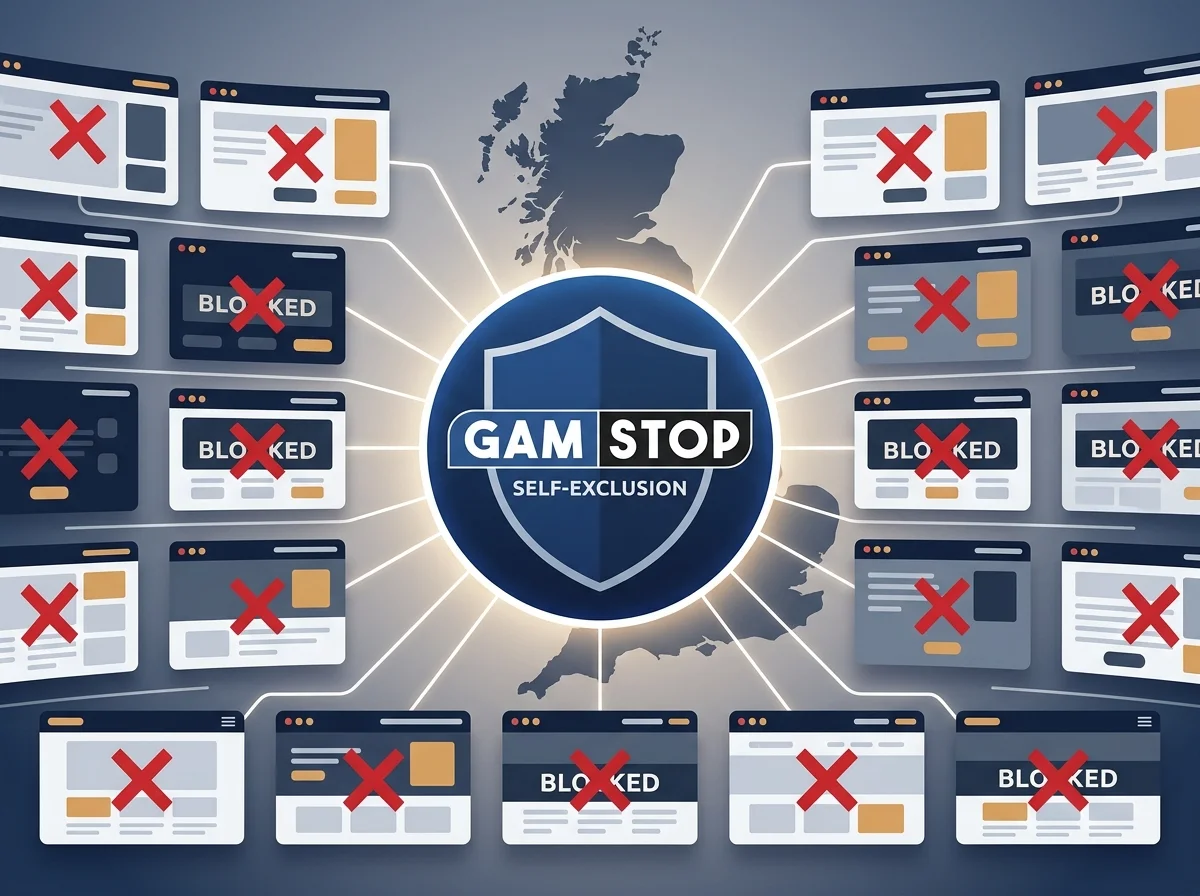
GamStop is the United Kingdom’s national online self-exclusion scheme. It exists for one reason: to give a person a single switch that turns off every UK-licensed online gambling account at the same time, for a period they choose, with no easy way to reverse the decision during that period.
That single switch covers a large share of the UK remote gambling market, but it has hard edges. It stops the operators inside the UK Gambling Commission’s licensing perimeter from opening or operating an account for someone on the list. It does not reach beyond that perimeter. Knowing exactly where the line sits is the first step in understanding both the scheme and the workaround that has formed around it.
Many players eventually wonder if they can bypass the scheme early, so we created a detailed guide on how to cancel GamStop self-exclusion legally.
Table of Contents
- GamStop Corporate Administration and Statutory Platform Purposes
- Our top casino picks for the UK
- The registration flow on gamstop.co.uk
- What is covered and what is not
- Exclusion duration: six months, one year, five years, or auto-renewal
- Adoption figures: where the scheme stands in 2026
- Why some users look outside the scheme
- What happens when the exclusion period ends
- Where GamStop sits among UK responsible-gambling tools
- Responsible gambling support in the UK
- What the scheme can and cannot do for a UK player in 2026
- About the author
GamStop Corporate Administration and Statutory Platform Purposes
GamStop is operated by National Online Self-Exclusion Scheme Limited, often shortened to NOSES Ltd. It is a not-for-profit company set up specifically to deliver the multi-operator self-exclusion requirement placed on UK Gambling Commission licensees.
The scheme launched in 2018 as a voluntary tool. It became mandatory for all UKGC-licensed remote gambling operators from 2020, after the Commission moved multi-operator self-exclusion from a campaign goal to a licence condition.
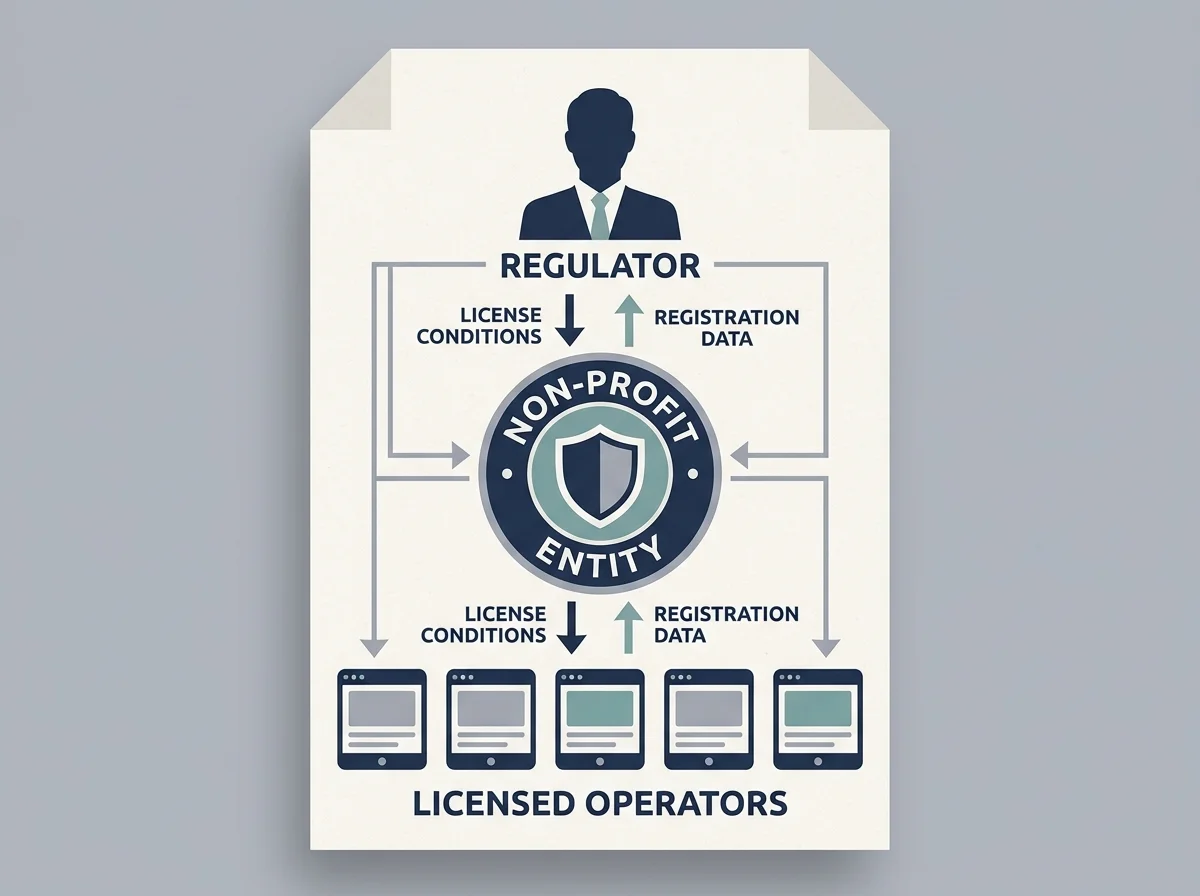
The legal scaffolding sits in two places. Section 33 of the Gambling Act 2005 makes it a summary offence for any operator to provide facilities for gambling in Great Britain without a Gambling Commission licence. The Gambling (Licensing and Advertising) Act 2014 extended that licensing obligation to any operator whose facilities are used in Great Britain, even where no equipment sits on UK soil. GamStop is the operational mechanism that delivers a specific Licence Condition and Codes of Practice requirement on those licensees: each must integrate with the central self-exclusion register and refuse service to anyone on it.
Because the licence drives the integration, and the integration is mandatory, every UKGC online remote operator is on the scheme. Everyone outside it is, by definition, outside the UK licence perimeter.
Our top casino picks for the UK
- x3betBonus: Welcome Pack 100% Up to £1.000 + 200 Free Spins · Payout speed: 1-3 business days
- EvoSpinBonus: 125% up to €2500 + 125 Free Spins · Payout speed: 1-3 business days
- SpinFormulaBonus: 550% Up To £15,000 + 550 FS · Payout speed: 1-3 business days
- ChanzeBonus: Slots Welcome Bonus #1 200% up to €500 · Payout speed: 1-3 business days
- WinBeastBonus: €5000 + 500 FS + €650 Freebet · Payout speed: 1-3 business days
- NightWinBonus: £900 + 400 free spins · Payout speed: 1-3 business days
- NightLuckBonus: Welcome Pack + 805% Up To 6400€ + 280 FS · Payout speed: 1-3 business days
- AmunbetBonus: Join now and get 450% up to 2,700 GBP + 450 FS · Payout speed: 1-3 business days
The registration flow on gamstop.co.uk
Registration is free for anyone resident in Great Britain and Northern Ireland. The process runs on the official site at gamstop.co.uk and takes only a few minutes for most users.
The user submits personal details: full name, date of birth, current address and any previous addresses used for opening gambling accounts, plus contact details and any aliases or alternate names that might appear on operator records. The scheme then verifies identity against credit-file data and any other reference sources it relies on, so that the record matches the same person across operator systems.
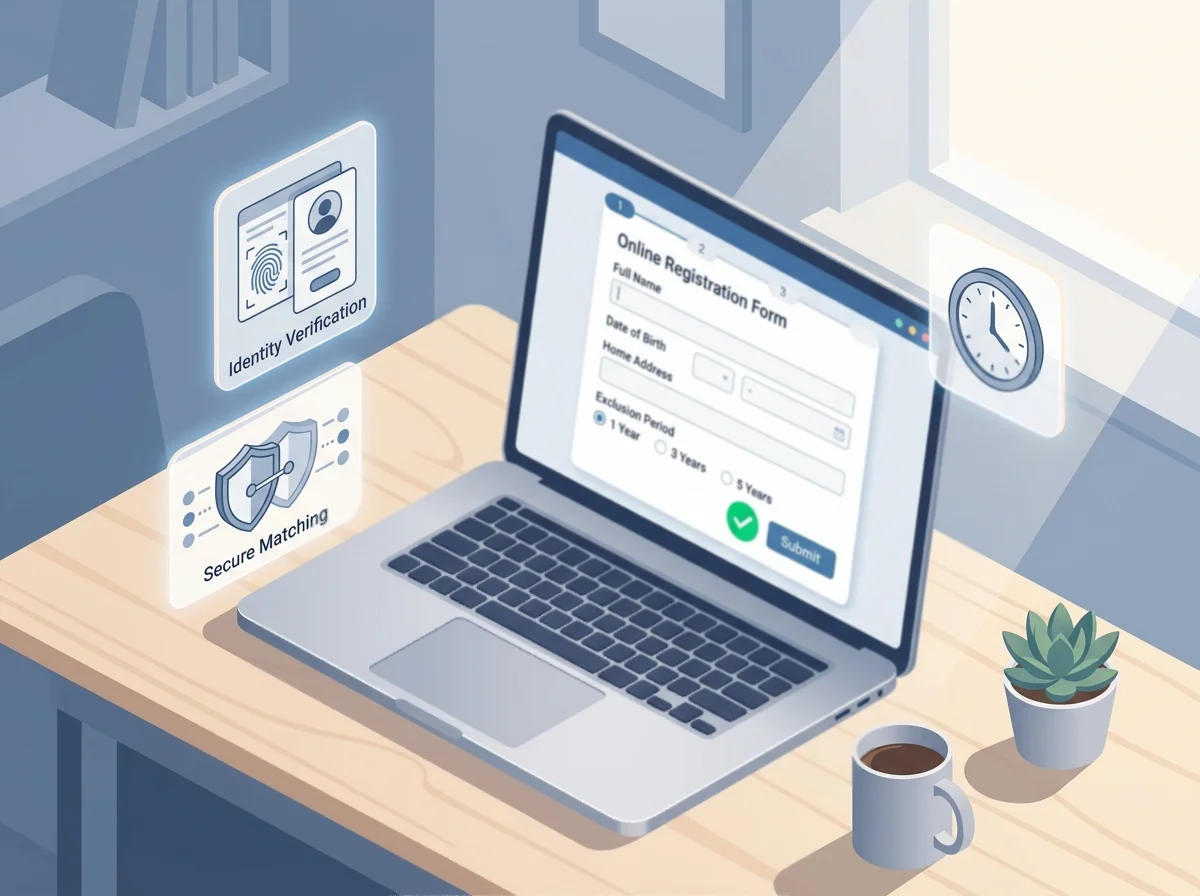
Once verified, the registration takes effect across the network. Operators are required to update their account databases against the GamStop register on a continuous basis; the operational standard is a synchronisation cycle measured in hours, not days, with the central register communicating new registrations and changes in close to real time. The result is that any account the user already holds with a licensed operator is closed for the duration of the exclusion, and any attempt to open a new account is blocked at the registration stage.
The user is asked to choose a duration: six months, one year, five years, or “five years with auto-renewal”. The auto-renewal option was added to the menu in 2024 and functions as the equivalent of an indefinite block: the exclusion rolls over at the end of each five-year period unless the user actively contacts GamStop to opt out.
What is covered and what is not
GamStop covers the entire UK Gambling Commission online remote sector. That is several hundred licensed websites in practice, encompassing online casinos, online sportsbooks, online bingo, online poker rooms and lottery products that hold a remote operating licence.
It does not cover land-based premises. Two companion schemes exist for that side of the market. High-street betting shops are covered by what was formerly known as the Multi-Operator Self-Exclusion Scheme, or MOSES; in 2025 it was rebranded “Gamstop Betting Shops” and now sits within the same group structure as the online scheme, with its own helpline on 0800 294 2060. Land-based casinos are covered by SENSE, the Self-Enrolment National Self-Exclusion scheme run separately by the Betting and Gaming Council.

What GamStop does not reach is the offshore casino sector. Operators without a UKGC licence have no obligation to query the register and, in most cases, no commercial relationship with NOSES Ltd at all. Players who self-exclude through GamStop are not blocked from accessing or registering at any casino that holds only a Curacao, Anjouan, Kahnawake or Costa Rica licence. This is the gap that the broader site addresses through what sits beyond the UKGC perimeter and that defines the entire “casino not on GamStop” category.
The standard recommendation for an excluded player who wants a tighter net is to install a device-level blocker alongside the GamStop registration. Gamban is the tool most often paired with GamStop in the UK and is offered free of charge through the TalkBanStop campaign to anyone in financial hardship. Where GamStop stops accounts at the operator level, Gamban prevents the device itself from reaching any gambling website regardless of where the operator is licensed.
Exclusion duration: six months, one year, five years, or auto-renewal
The four options on the duration menu are designed to map onto different reasons a person might be using the scheme.
The six-month option is the shortest available. It accounts for the largest single share of choices among people aged 16 to 24, where 38 per cent select it. Among under-25s the pattern increasingly looks like preventative use rather than crisis use: the same age group accounted for 29 per cent of new registrations in the second half of 2025, with a 40 per cent year-on-year rise in sign-ups from that cohort.
One year sits between the two extremes and is the least selected option overall in recent reporting. Five years remains the most popular choice across all ages, taken by 47 per cent of registrants. Among legacy registrations, the five-year exclusion was the default if the user took no further action at the minimum date, with the registration extending out to seven years in some cases. The new auto-renewal option, introduced in 2024, is more transparent: the five-year period rolls over at the end of each cycle unless the user explicitly opts out, with the user notified rather than left to discover the extension by accident.
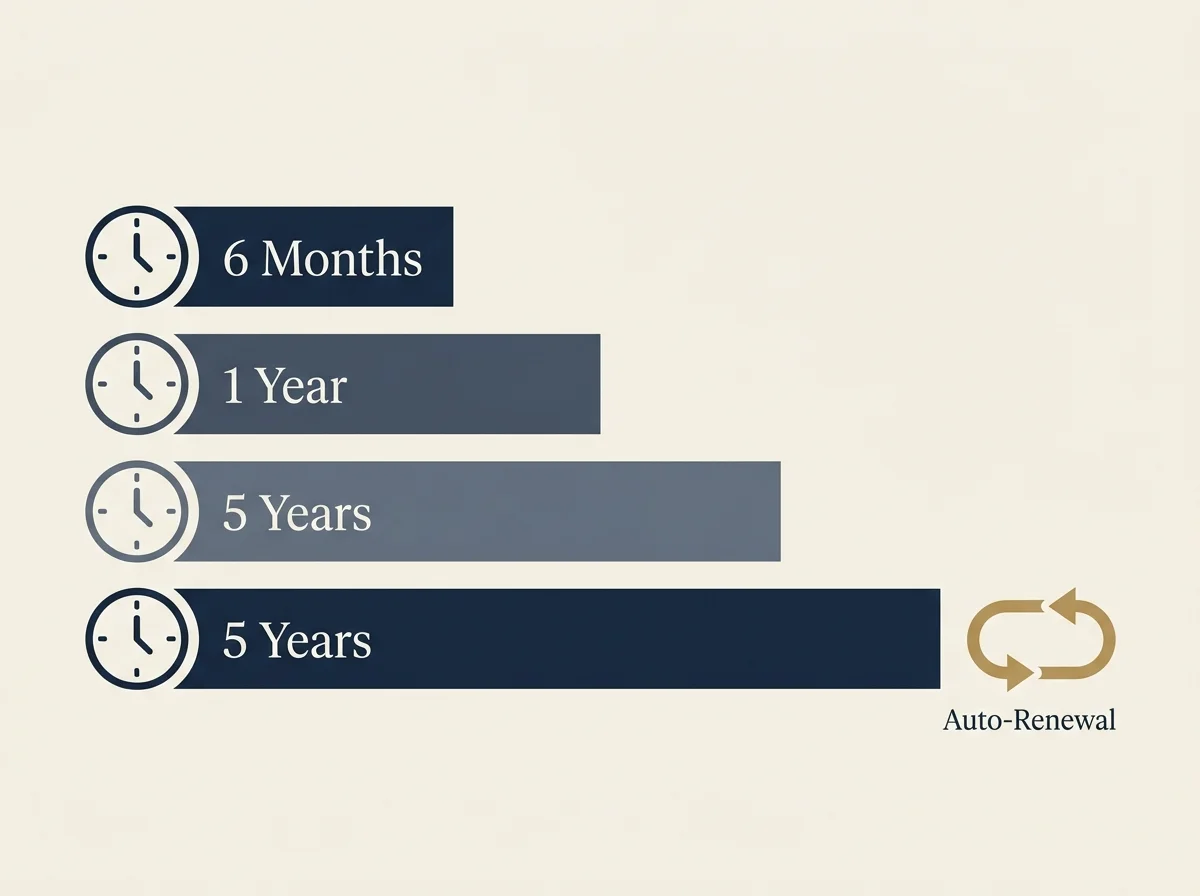
Take-up of the auto-renewal option has been climbing throughout 2025. 2025 marked the first month in which more than half of users selecting a five-year period also opted for auto-renewal. Functionally this means a growing share of users are treating GamStop as a long-term commitment rather than a temporary cooling-off mechanism.
The duration cannot be reduced or reversed inside the chosen window. This is a design feature, not an operational limitation. The whole point of registering during a difficult moment is that the difficult moment cannot then unwind the registration on its own momentum. Removal becomes possible only after the minimum period ends, and the route through that is covered in detail on the GamStop cancellation process at expiry.
Adoption figures: where the scheme stands in 2026
By the end of 2025, just over 562,000 people had registered with GamStop since the scheme launched in 2018. That represents roughly one per cent of the UK adult population, although a share of those records are historical exclusions that have since expired and not been actively renewed.
The second half of 2025 alone added 58,675 new registrations, averaging 319 sign-ups per day. The year-on-year growth in registrations from people aged 16 to 24 was the standout figure: a 40 per cent increase, with that age group representing 29 per cent of all new sign-ups in the half-year.
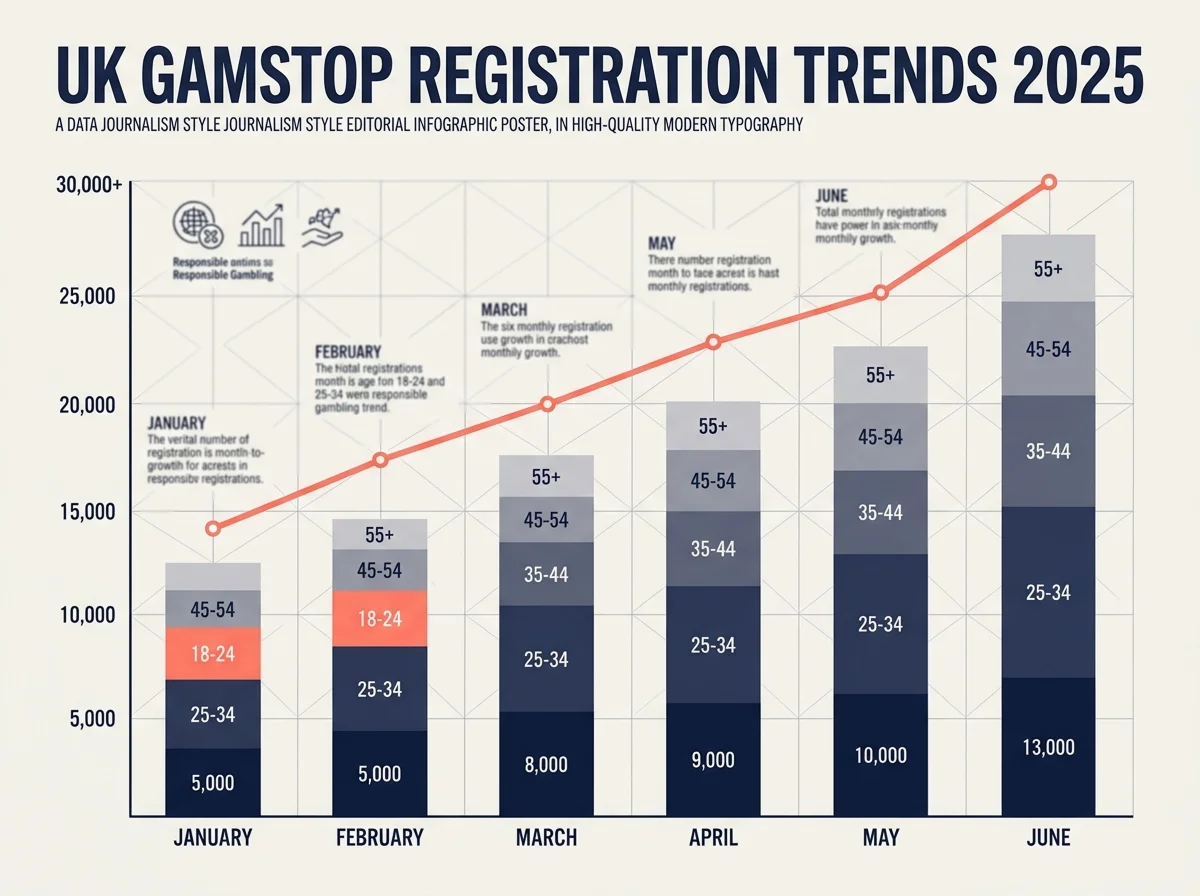
Behavioural patterns inside those numbers are informative. The under-25 cohort is the only age group where the six-month option overtakes the five-year default, which is consistent with use as a flexible self-management tool rather than a hard stop after a crisis. Across all age groups, the five-year option still dominates at 47 per cent.
Effectiveness has been measured in two main ways. An independent evaluation by Ipsos, published in 2024, found that 75 per cent of GamStop users reported they had stopped gambling online during their exclusion. Separately, Gambling Commission analysis of longer-term outcomes suggests around 43 per cent of users remain effectively excluded over the long run, with the gap between the two figures largely reflecting offshore migration and other forms of leakage. The TalkBanStop campaign, which pairs GamStop with Gamban and counselling support through GamCare, reports markedly higher success rates than GamStop alone.
Why some users look outside the scheme
The scheme’s effectiveness is uneven, and the population leaving the regulated perimeter is not random. Two recurring motives appear in the Gambling Commission’s own research on consumer migration to unlicensed sites: avoiding a current self-exclusion and a preference for cryptocurrency as a deposit method, which UK-licensed operators generally do not accept.
A third group is reacting to recent product-level changes inside the UKGC perimeter. Statutory stake limits for online slots came into force in 2025, capping spins at £5 for adults aged 25 and over and at £2 for those aged 18 to 24. Affordability friction has also tightened, with the Financial Vulnerability Check threshold dropped to £150 of net deposit over a rolling 30-day window in 2025. Players who view these changes as restrictive look for routes outside the licensed market, where neither the cap nor the affordability check applies.
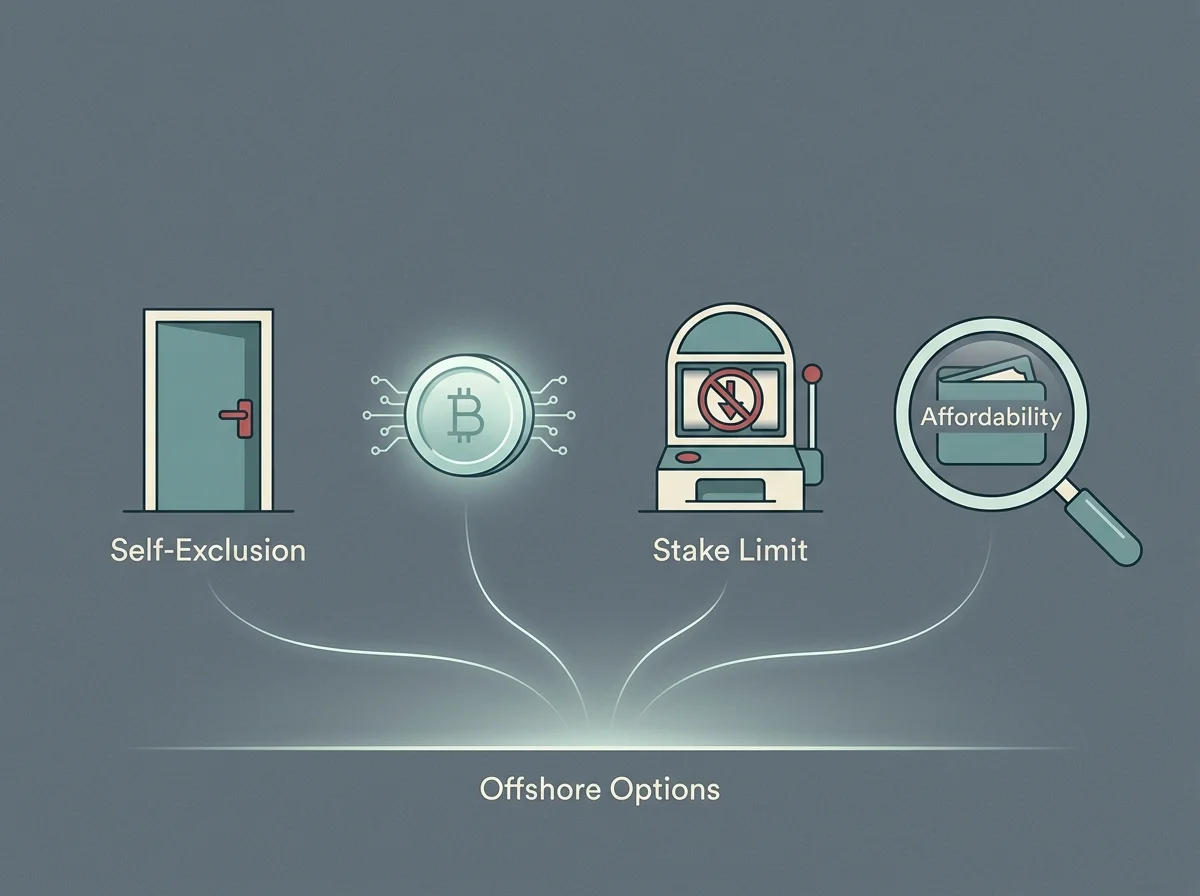
Whatever the motivation, the consequence is the same. A player who deposits at an offshore-licensed casino during an active GamStop period has not committed any offence under UK law, but they have stepped entirely outside the UK consumer-protection framework. The detail of that asymmetry sits on the page covering whether playing at a non-GamStop casino is legal in the UK, and the structural consequences are mapped out under the protection gap beyond GamStop.
For someone in an active exclusion, the question of motive matters less than the question of what to do next. The page on legitimate routes during an active exclusion sets out the responsible-gambling tools available without leaving the UK system.
What happens when the exclusion period ends
GamStop does not lift the exclusion automatically at the end of the chosen period. The expiry date is the earliest moment removal becomes possible, not the moment it happens.
To request removal, the user calls 0800 138 6518. The call handler runs an identity check using the same personal details supplied at registration, plus additional verification questions. If everything matches, the request is accepted and a mandatory 24-hour cooling-off period begins. During those 24 hours, nothing changes on the register. The exclusion remains in force, and the user retains the option to withdraw the removal request without giving a reason.
Once the 24 hours have elapsed without a withdrawal, the registration is removed. Operators are informed through the same synchronisation channel that handled the original registration, and existing accounts that were dormant during the exclusion can usually be reopened by contacting the relevant operator and completing any updated verification steps.
For registrants who opted for auto-renewal, no action at the five-year mark means the exclusion continues automatically. The user is not required to take any step to remain excluded. Removal still requires the 0800 138 6518 call and the 24-hour cooling-off period.
Where GamStop sits among UK responsible-gambling tools
The scheme is one element of a broader set of consumer-protection mechanisms maintained inside the UK regulatory perimeter. The others worth being aware of, because they continue to apply during a GamStop period or can be paired with it, include:
- Operator-level deposit limits, time limits and reality-check pop-ups, available on every UKGC-licensed account.
- Statutory slot stake limits of £5 per spin for over-25s and £2 for 18-to-24 year olds, in force since spring 2025.
- The Financial Vulnerability Check at £150 net deposit per 30 days on UKGC operators since 2025, with the broader Financial Risk Assessment regime moving through its pilot phase.
- Device-level blockers such as Gamban (£24.99 per year, free through the TalkBanStop hardship route) and BetBlocker.
- Bank-level gambling-transaction blocks, offered as a one-tap toggle inside the apps of HSBC, Barclays, NatWest, Monzo, Revolut, Lloyds, first direct and Halifax.
- The National Gambling Helpline on 0808 8020 133, run free of charge by GamCare and operating 24 hours a day.
- NHS National Gambling Treatment Service clinics, with the network expanding from the original National Problem Gambling Clinic in London and the Northern Gambling Service in Leeds.
The point of listing them together is that GamStop is not designed to be the only protection in a vulnerable player’s setup. Pairing it with at least one of Gamban, a bank-level block, and counselling support through GamCare or the NHS produces materially better outcomes than relying on the operator-side block on its own.
Responsible gambling support in the UK
If thinking about non-GamStop sites is itself a sign that the original exclusion is under pressure, the most useful step is talking to someone before any deposit is made. UK support is free, confidential and available 24 hours a day.
- National Gambling Helpline: 0808 8020 133 (free, 24/7, run by GamCare)
- GamCare web support and live chat: gamcare.org.uk
- BeGambleAware live chat: begambleaware.org
- GAMSTOP self-exclusion: gamstop.co.uk
- Samaritans (general emotional distress): 116 123
What the scheme can and cannot do for a UK player in 2026
GamStop is a precise tool. Inside its perimeter it does exactly what it is supposed to do: it stops a registered user from opening or holding an account with a UK-licensed online operator for as long as the exclusion lasts. That is a meaningful piece of consumer protection, and the adoption figures show it is doing increasing work, particularly among younger players who appear to use the six-month option as a preventative measure.
Outside its perimeter it does nothing. The same online ecosystem that prompted the scheme has continued to grow on the offshore side of the line. Recognising both halves of that picture, the operator-side and the scheme-side, is the only honest basis for any decision about gambling activity during or after an exclusion. The companion pages cover the operator-landscape detail and the legal asymmetry in the depth that conversation needs.
About the author
Daniel Ashworth covers UK iGaming regulation, self-exclusion frameworks and the offshore operator landscape that sits outside the Gambling Commission perimeter. With over twelve years analysing licensed and non-UK gambling markets, he writes about the practical impact of tools like GamStop, affordability checks and KYC requirements on British players. His work focuses on how licensing jurisdiction, payment infrastructure and consumer-protection regimes shape the real-world experience of using a casino outside the UK system. He holds certifications in responsible gambling practice and has contributed analysis to research on multi-operator self-exclusion schemes.
If you have fully recovered and wish to resume responsible gaming, you can explore trusted non-GamStop casinos that accept British residents.