Offshore Non-GamStop Casino Risks and Real Dispute Resolutions
 Available in GB
This page is written for the reader who already knows the marketing pitch. A non-GamStop casino is, by definition, an operator outside the UK Gambling Commission’s licensing perimeter. That single fact removes a specific set of consumer protections that UK players take for granted at UKGC-licensed sites. What follows is a structural map of what is missing, what fallback routes exist, and what the documented dispute patterns actually look like in 2026.
Table of Contents
- UK Player Protection Flaws and Missing Statutory Safeguards
- The IBAS dispute-resolution gap
- Our top casino picks for the UK
- Documented risk patterns in 2026
- How disputes actually resolve in practice
- Responsible-gambling resources and legitimate alternatives
- What this leaves a UK player with in 2026
- About the author
UK Player Protection Flaws and Missing Statutory Safeguards
A UK player crossing the UKGC perimeter loses the practical apparatus of UK consumer protection in gambling. Each of these absences is structural, not a matter of individual operator choice.
- GamStop coverage. The national online self-exclusion register has no reach outside UKGC licensees. A self-excluded player who deposits at an offshore site has stepped outside the scheme they registered for.
- Affordability and Financial Risk Assessment checks. UKGC operators apply Financial Vulnerability Checks at a £150 net deposit threshold over a rolling 30-day window (the threshold was reduced from £500 in 2025). The Financial Risk Assessment pilot launched in 2024 and post-pilot analysis was still ongoing in 2026. Offshore operators have no equivalent regime.
- Statutory stake caps. A £5 per spin slot stake limit applies to UKGC sites for adults aged 25 and over from 2025; a £2 cap applies to 18-24-year-olds from 2025. Offshore sites have no equivalent.
- Mandatory game-cycle pacing. The 2.5-second minimum slot game cycle on UKGC sites does not apply offshore.
- Session timers and reality checks. Mandatory tooling at UKGC sites; absent or operator-optional offshore.
- KYC discipline at withdrawal. UKGC sites must complete identity verification before paying out and apply ongoing source-of-funds checks. Offshore operators commonly apply lighter or no KYC at small stakes and trigger unannounced verification after a large win, which is the single most documented source of payment disputes.
- Mandatory responsible-gambling links. UKGC sites must surface UK helpline and treatment resources. Offshore sites are not required to.
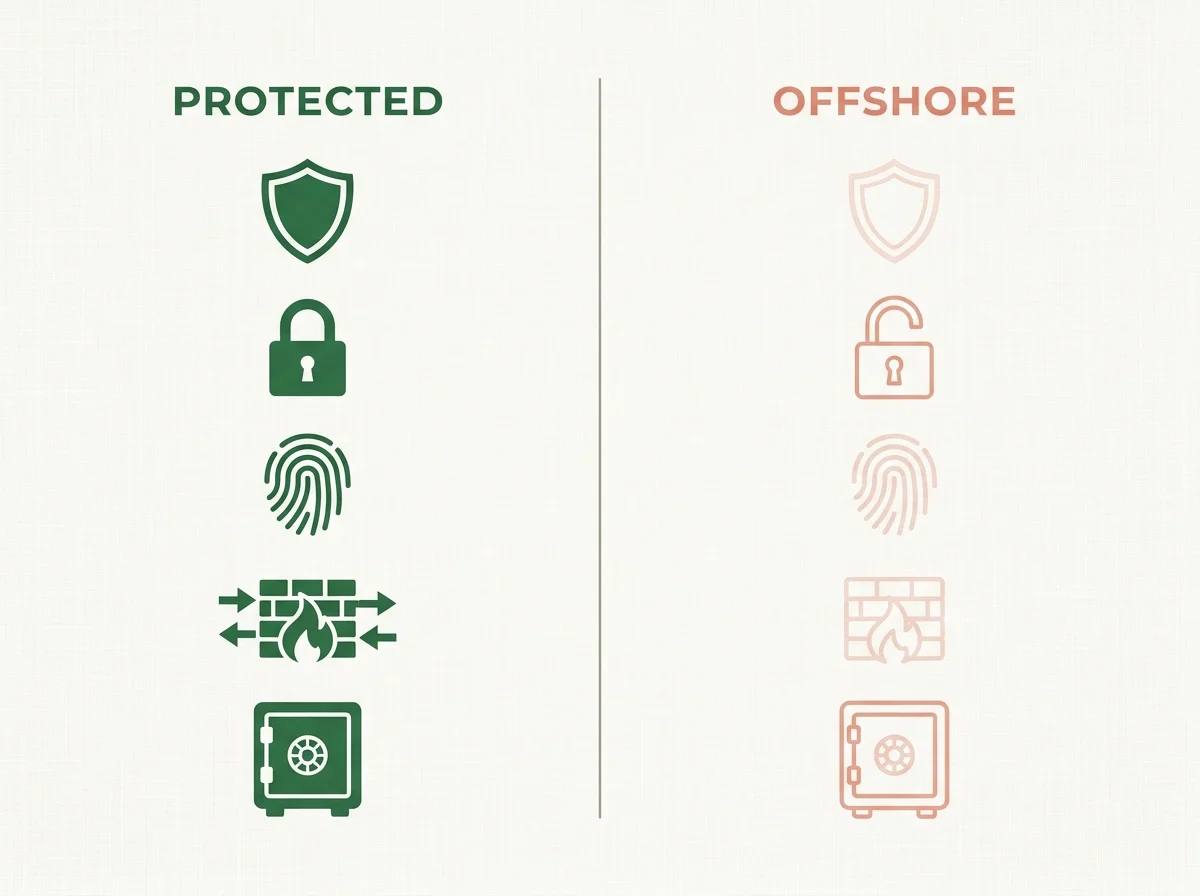
For the regulatory anchor that all of this sits inside, the UK Gambling Commission publishes the Licence Conditions and Codes of Practice (LCCP) governing affordability, KYC and consumer-protection requirements. The statutory framework is the Gambling Act 2005, including Section 33 which contextualises the licensing perimeter that defines this entire category.
The IBAS dispute-resolution gap
The single biggest underdiscussed feature of the non-GamStop space is the absence of IBAS. The Independent Betting Adjudication Service was founded in 1998 and is the UK Gambling Commission’s approved Alternative Dispute Resolution (ADR) body for the licensed sector. IBAS has handled over 100,000 cases since inception and issues awards binding on the operator up to £10,000.
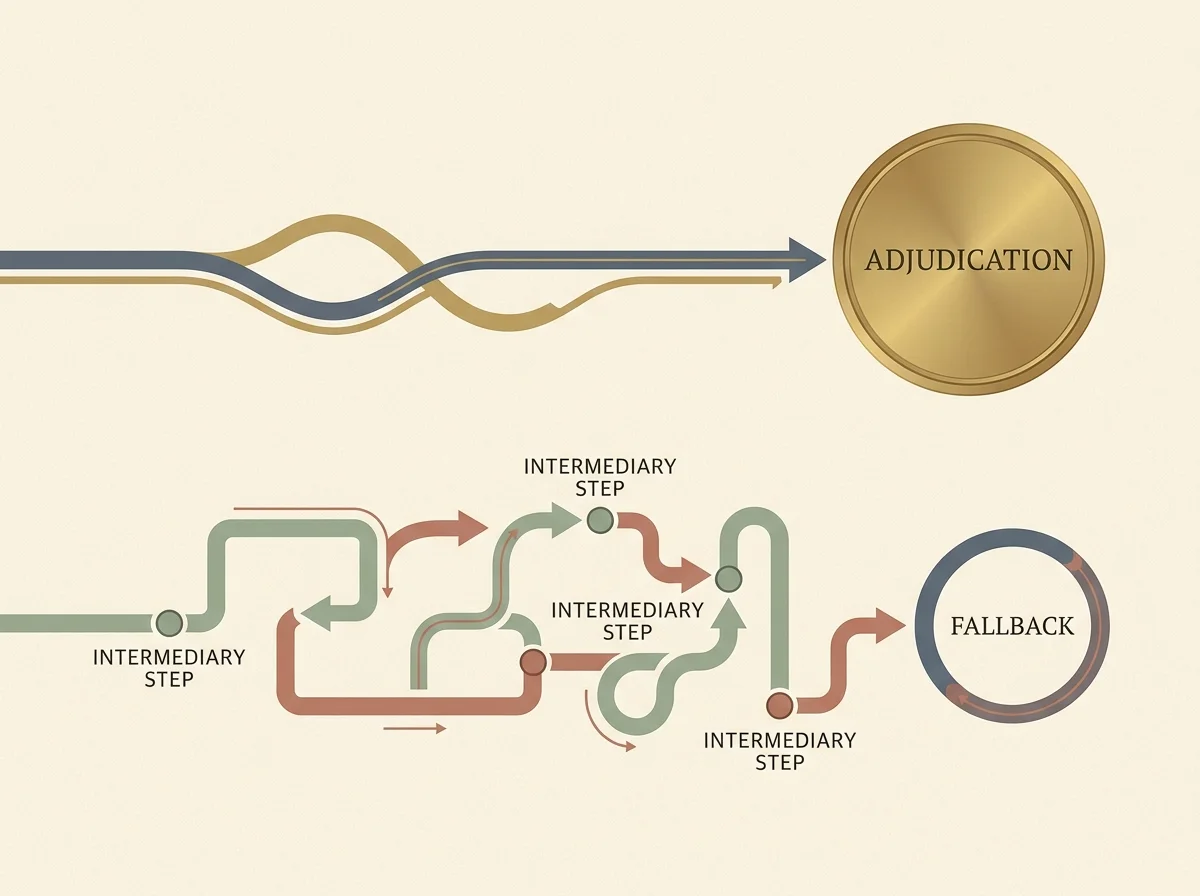
IBAS only adjudicates against operators that are registered with it. In practice, that means UKGC licensees. A UK player at an offshore casino has no IBAS route. There is no statutory ADR. There is no Financial Ombudsman pathway because no UK-regulated financial firm is the counterparty.
The fallback ladder
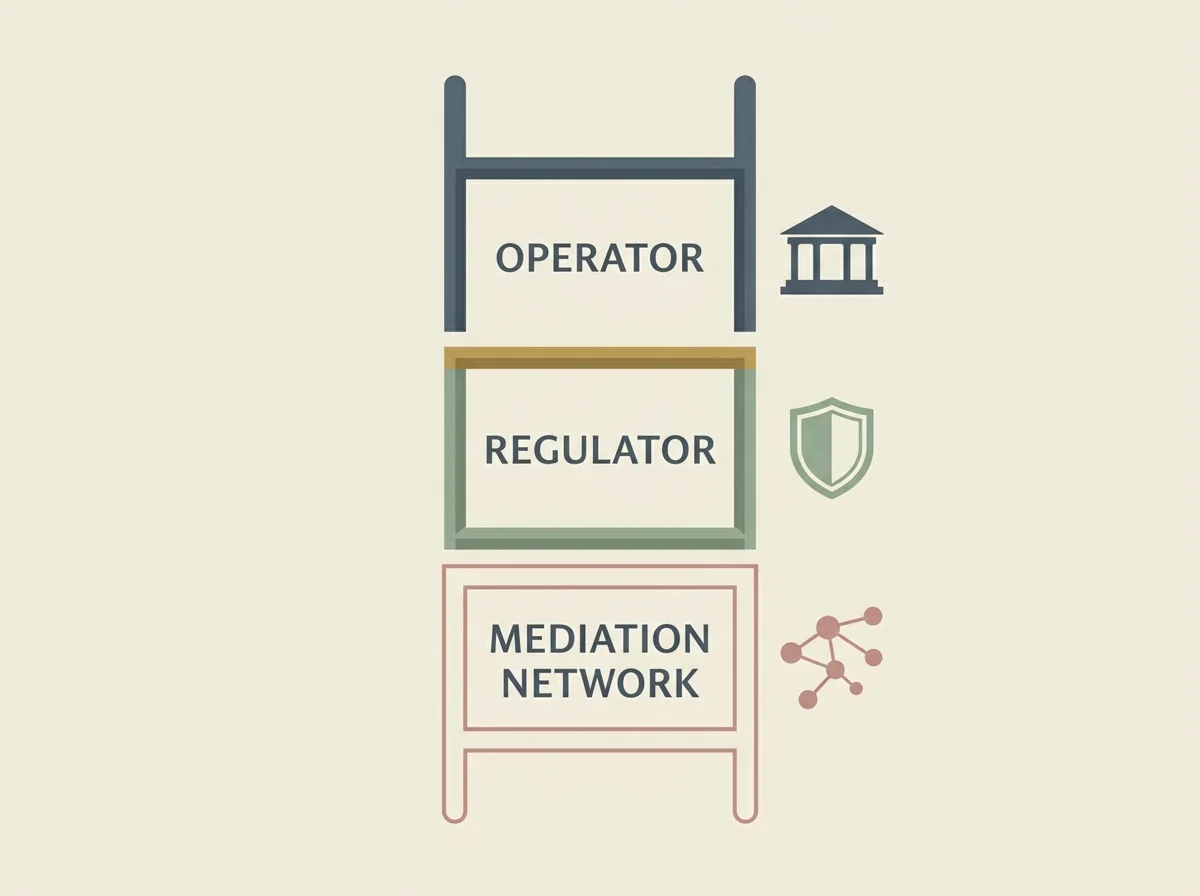
What a UK player at a non-GamStop casino actually has is a three-step ladder, each step weaker than the equivalent at a UKGC site.
- The casino’s internal complaints process. Required by the licensing regime (Curacao, Anjouan) but operator-defined in detail. Outcome depends on the operator.
- The licensing jurisdiction. The Curacao Gaming Control Board’s complaints mediation, or the Anjouan Gaming Authority’s equivalent. Real but slow and with limited remedy. Awards are not equivalent to UK statutory orders.
- Third-party mediators. AskGamblers AGCCS (the AskGamblers Casino Complaint Service) and the Casino Guru complaints team operate as informal mediators. They publish dispute outcomes and apply reputational pressure. They have no statutory enforcement power; their leverage is the operator’s interest in protecting its brand and affiliate placement.
For the licence-side detail on how each jurisdiction handles complaints differently, see Curacao and Anjouan in detail.
Our top casino picks for the UK
- x3betBonus: Welcome Pack 100% Up to £1.000 + 200 Free Spins · Payout speed: 1-3 business days
- EvoSpinBonus: 125% up to €2500 + 125 Free Spins · Payout speed: 1-3 business days
- SpinFormulaBonus: 550% Up To £15,000 + 550 FS · Payout speed: 1-3 business days
- ChanzeBonus: Slots Welcome Bonus #1 200% up to €500 · Payout speed: 1-3 business days
- WinBeastBonus: €5000 + 500 FS + €650 Freebet · Payout speed: 1-3 business days
- NightWinBonus: £900 + 400 free spins · Payout speed: 1-3 business days
- NightLuckBonus: Welcome Pack + 805% Up To 6400€ + 280 FS · Payout speed: 1-3 business days
- AmunbetBonus: Join now and get 450% up to 2,700 GBP + 450 FS · Payout speed: 1-3 business days
Documented risk patterns in 2026
Beyond the structural gap, several recurring patterns are documented across third-party mediator records and player-complaint sites. None of these is unique to a single operator; all of them are common enough across the non-GamStop pool to be worth recognising.
Retroactive KYC after a large win
The most documented pattern. A player deposits, plays, wins, requests withdrawal. The operator triggers KYC for the first time at the withdrawal step, asking for identity documents, address proof, source-of-funds evidence and sometimes video verification. Processing windows extend from hours to weeks. In some documented cases, partial requirements stretch into months of back-and-forth.

The pattern is not necessarily fraudulent. UK-licensed operators apply KYC up front; offshore operators frequently defer it. The deferral is what makes the post-win request feel like an obstacle. A UK player encountering this should expect the process to be slow.
Account closure with balance forfeiture
A separate, more aggressive pattern. The operator closes the account under broad “bonus abuse”, “anti-fraud” or “Terms breach” clauses and either forfeits the balance or refunds only the original deposit. The clauses are typically written widely enough to give the operator wide discretion.
Goldenbet is a documented worked example. Complaint-tracker entries describe accounts permanently closed with balance forfeiture under broad anti-fraud-policy clauses. The pattern is not exclusive to one brand. Goldenbet is also a sister brand of MyStake and Rolletto under the same operating company (Santeda International B.V., Curacao licence OGL/2024/1798/1048), so a player who has had this experience at one Santeda brand is not in a different counterparty relationship at the others.
Clone-site fraud and look-alike domains
A scam operator builds a near-identical website on a similar domain, copies the trade dress of an established brand and references a licence number the cloned brand genuinely holds. The clone collects deposits and never pays out. A 30-second check against the regulator’s register exposes the clone every time. A player who skips the check is the player who finds the deposit gone.
Sister-brand concentration
Several consumer-facing brands often share one operating company and one OGL licence. The Santeda example sits behind MyStake, Goldenbet, Rolletto and several other consumer brands. JackBit/Jack.com sits under Ryker B.V. with related crypto-first brands. Winstler operates under Group Gaem B.V. with documented attribution inconsistency across review sources (the operating company has been variously cited as Favorit United N.V., Dama N.V., Group Gaem B.V. and Casino Curacao across reviews between 2022 and 2026).
The risk is concrete. A blanket decision (account closure, bonus revocation, KYC requirement) at one consumer brand can apply at the sister brands. Switching from one to another inside the same operating company is not switching counterparty.

Currency conversion costs
Most offshore casinos hold balances in USD or EUR. UK players incur foreign-exchange costs on every deposit and withdrawal. Over the life of a player account the cumulative FX drag can be material, especially at multi-deposit play.
How disputes actually resolve in practice
The realistic answer is that they resolve slowly, with uncertain outcomes, and with the operator holding most of the procedural cards. Three observations from the documented record.
First, the operator’s behaviour matters more than the licence. A Curacao OGL licensee with a strong reputation and an active third-party-mediator track record will typically resolve a withdrawal delay within days once KYC is supplied. A Costa Rica-registered operator with no mediator engagement will not.
Second, third-party mediators do work in many cases. AskGamblers and Casino Guru publish outcomes; affiliates monitor those outcomes; operators that depend on affiliate traffic respond to public mediator findings. The leverage is real, even though it is not statutory.
Third, the player’s documentation discipline matters disproportionately. Screenshots of deposits, bonus terms at the time of deposit, transaction IDs and timestamped communications are the player’s evidence base in a mediator complaint. A player who does not keep records does not have a strong complaint to make.
For the operator-side context behind these risks, see the operator-landscape overview. For the payment-rail mechanics where most disputes start, see the payment infrastructure where most disputes start.
Responsible-gambling resources and legitimate alternatives
If you are reading this page because a withdrawal is stuck, the helpline below cannot retrieve the funds. It can help with the wider context that often sits underneath the original decision to deposit. If you are reading this page because you are considering depositing at a non-GamStop site during an active GamStop self-exclusion, the same helpline is the right first call.
- National Gambling Helpline: 0808 8020 133 (free, 24/7, GamCare-run)
- gamcare.org.uk for counselling and treatment
- begambleaware.org for live chat and treatment funding
- gamstop.co.uk for the self-exclusion scheme itself
- NHS National Gambling Treatment Service
- Samaritans: 116 123
For the legitimate routes during an active self-exclusion (Gamban device-level block, bank-level gambling transaction block, cooling-off within a UKGC account), and the formal cancellation route after expiry, see the legitimate cancellation route after expiry. For the scheme itself, see how the GamStop scheme works in detail.
What this leaves a UK player with in 2026
The non-GamStop space is not lawless. It is regulated, but by a different and weaker set of regulators than the UKGC framework UK players take for granted. The gap is structural, not malicious. What changes is the player’s protection profile, the dispute route available if something goes wrong, and the speed and certainty of resolution.
A UK player choosing to play at a non-GamStop casino is choosing to take on those gaps personally. The documentation discipline that follows (operator identification, licence verification, transaction records, timestamped communications) is the apparatus the player builds to substitute for the UKGC framework that is not there.
For the comprehensive picture across the whole UK 2026 landscape, see the comprehensive picture.
About the author
Daniel Ashworth covers UK iGaming regulation, self-exclusion frameworks and the offshore operator landscape that sits outside the Gambling Commission perimeter. With over twelve years analysing licensed and non-UK gambling markets, he writes about the practical impact of tools like GamStop, affordability checks and KYC requirements on British players. His work focuses on how licensing jurisdiction, payment infrastructure and consumer-protection regimes shape the real-world experience of using a casino outside the UK system. He holds certifications in responsible gambling practice and has contributed analysis to research on multi-operator self-exclusion schemes.